Monday, May 5, 2025

The New Testament to Come: A Manifesto of Apostolic Restoration A Living Testament, Not a Canonical One

 A proposition put forward by Kingdom of God Ministries founder Dr. Stephen E. Jones that a third testament is yet to be written sounds ludicrous, but it is something he very much appears to believe will happen. But "ifthis were to be the case....

What Might This "New Testament" Contain?

1. A Restoration of Apostolic Doctrine

Returning to the simplicity and purity of Christ's teachings through the apostles—not the filtered dogmas of later councils—means:

  • Re-centering faith, repentance, baptism, and the laying on of hands (Hebrews 6:1–2) as foundational.

  • Recovering the doctrine of Christ (2 John 1:9) over traditions about Christ.

  • Refuting inherited structures like apostolic succession and sacramental hierarchies that replaced Spirit-led gifts and callings.

2. The Exposure and Rejection of the Nicolaitan Spirit

Revelation 2:6,15 highlights the Lord's hatred for the deeds and doctrines of the Nicolaitans—those who conquer the laity, establishing a clergy/laity divide. The institutional Church embraced this through:

  • The creation of the “priestly” class who mediate between God and man, contradicting 1 Timothy 2:5.

  • Elevating Church authority above the Holy Spirit’s voice in the individual believer.

  • Substituting Spirit-led guidance with hierarchical control, tradition, and law.

3. Repudiation of the “Vicar of Christ” Doctrine

The idea that any human being stands in the place of Christ is a theological inversion of Pentecost. Instead of:

  • Internal transformation through the indwelling Holy Spirit,

  • The Church institutionalized external obedience to a human “head,”

  • Replacing Christ’s headship with a human mediator—essentially recreating the Old Covenant priesthood Christ fulfilled and abolished.

4. A Return to the Spirit of Truth

John 16:13 promises the Spirit of Truth will guide into all truth—not ecclesiastical decrees. A new outpouring would:

  • Emphasize intimacy with God, not rituals or relics.

  • Restore prophetic discernment, not political alliances.

  • Awaken believers to their priesthood (1 Peter 2:9) and spiritual gifts, so that the body edifies itself in love (Ephesians 4:16).


✦ A Living Testament, Not a Canonical One?

This third “testament” may be:

  • Not a new set of books, but a Spirit-empowered people whose lives are epistles (2 Cor. 3:2–3).

  • A corporate revelation—the fullness of Christ expressed in His body (Ephesians 4:13), manifesting in maturity and truth.

  • A Tabernacles people who walk in unity, holiness, and divine authority—unbought, unbossed, and unmoved by the Babylonian church system.


✦ Getting Back to Basics

This will feel like a reformation of the Reformation—not in protest, but in Spirit-led reconstruction. Stripping away centuries of additions and assumptions, this “new testament to come” would reaffirm:

  • Christ alone as Head.

  • The Holy Spirit alone as Guide.

  • The Word of God alone as the standard.

  • The body of believers as the temple of God.

The time has come to discern what the Spirit is saying to the churches—not by adding to the canon of Scripture, but by embodying the revelation that has already been given in Christ. Just as the New Testament fulfilled the shadows of the Old, so now we await a further unfolding—not in ink, but in life. The new testament to come is not a new Bible, but a people: a body led by the Spirit, washed in the Word, matured into the measure of the stature of Christ.

1. A Restoration of Apostolic Doctrine

This new witness must return to the foundation laid by the apostles and prophets, with Christ Jesus Himself as the cornerstone. The apostles taught the simplicity of the Gospel: repentance from dead works, faith in God, baptism, the laying on of hands, resurrection of the dead, and eternal judgment (Heb. 6:1–2). These foundational truths have been eclipsed by centuries of scholasticism, sacerdotalism, and speculation. What is needed now is not another council, but a cry for purity.

We must:

  • Restore the doctrine of Christ as the center of all theology (2 John 1:9).

  • Reject doctrines built on philosophical abstraction rather than revealed truth.

  • Proclaim Christ crucified, risen, ascended, and returning—not institutional dogmas or denominational distinctives.

2. The Rejection of the Nicolaitan Spirit

The Lord Jesus declared twice in Revelation His hatred for the deeds and doctrines of the Nicolaitans—those who conquer the laity by creating a class of spiritual overlords. This spirit has been enshrined in the ecclesiastical systems that dominate today:

  • Clerical hierarchies that separate the people of God from their High Priest.

  • Liturgical rituals that obscure rather than reveal the glory of Christ.

  • Doctrinal tribunals that silence prophetic voices and quench the Spirit.

The "new testament to come" must dismantle this man-made scaffolding and restore the priesthood of all believers.

3. The False Doctrine of the Vicar of Christ

No man stands in the place of Christ. The title "Vicar of Christ" is a theological affront to the finished work of the cross and the ongoing ministry of the Holy Spirit. It is Christ alone who is Head of the Church. It is the Holy Spirit alone who leads us into truth. And it is the people of God who together form the temple of the living God.

The idea that Christ requires a representative on earth beyond His own Spirit is a return to the Levitical system—one that Christ abolished in His death. It is not reformation that is needed here, but repentance.

4. The Return of the Spirit of Truth

The Church must be awakened again by the Spirit of Truth, not the traditions of men. We need a re-baptism of reality:

  • A revival of the inward witness over the outward show.

  • A rejection of emotional manipulation and marketing tactics masquerading as ministry.

  • A hunger for holiness, discernment, and love of the truth, no matter the cost.

The "new testament to come" is already being written—on the hearts of men and women who tremble at His Word and walk by the Spirit.

5. Toward the Tabernacles People

What began at Pentecost must move toward Tabernacles. Just as Israel journeyed from Passover to Sinai to the Feast of Booths, the Church must mature:

  • From justification to sanctification to glorification.

  • From infancy in Christ to maturity in sonship.

  • From the Church age to the Kingdom age.

These are not mere doctrines—they are lived realities for those who will walk in them. God is preparing a people who will manifest the life of His Son, not merely in creeds but in character, in power, and in purity.


Conclusion

This "new testament" is not a book to be canonized, but a people to be consecrated. A body raised in resurrection life. A remnant bearing the mark of obedience, truth, and love. It is not a reinvention of Christianity—but its restoration.

Let him who has ears to hear, hear what the Spirit is saying.

Come, Lord Jesus.

Indeed, and to encourage the fainthearted all the more....

In every age of transition, God calls His people back to the foundations. In our time, we stand at the precipice of another divine unveiling—not a rewriting of Scripture, but a rediscovery of its spirit, and a fuller manifestation of its power. This "New Testament to Come" is not a new book, but a new people: a generation led not by institutions, but by the indwelling Spirit of the living God.

Let's review what has just been stated.

1. A Restoration of Apostolic Doctrine

The apostles preached Christ crucified, risen, and reigning—not church polity, tradition, or denominational creeds. This new era demands:

  • A return to the simplicity that is in Christ (2 Corinthians 11:3), rooted in repentance, faith, baptism, and Spirit-empowered discipleship.

  • A rejection of the historical suppression of apostolic teachings that emphasized relational obedience to Christ over sacramental ritualism.

  • An awakening to the original call to make disciples, not just converts, and to cultivate maturity through the fivefold ministry and the gifts of the Spirit.

2. The Rejection of the Nicolaitan Spirit

The deeds and doctrines of the Nicolaitans—those who established a power divide between clergy and laity—were hated by the Lord (Revelation 2:6,15). Yet the institutional church codified them:

  • By elevating hierarchical titles and control mechanisms over the organic, Spirit-led priesthood of all believers.

  • By quenching the Spirit in favor of manmade order.

  • By substituting divine guidance with ecclesiastical tradition.

This "new testament" movement will break this yoke, equipping every believer to hear from God, minister in power, and walk in freedom.

3. Dismantling the Vicar of Christ Doctrine

The most egregious example of spiritual usurpation lies in the doctrine of the “Vicar of Christ”—a title implying a man may stand in Christ’s place. In truth:

  • Christ alone is the Head of the Church (Ephesians 1:22).

  • The Holy Spirit was sent to dwell within, not to be replaced by an external mediator.

  • The new covenant abolished the need for priestly intermediaries. Every believer now has access to the Father through the Son, by the Spirit.

To worship the Spirit as a separate person rather than receive Him as the extension of God’s own being is to confuse the intimacy of Pentecost with institutional dogma.

4. The Rise of the Living Epistle

What is coming is not a canon, but a community:

"You are our letter, written in our hearts, known and read by all men... not on tablets of stone but on tablets of human hearts" (2 Corinthians 3:2–3).

This movement will:

  • See believers live as epistles of Christ, reflecting His nature.

  • Be guided by the Spirit of truth into all truth (John 16:13), with no need for Rome, synod, or seminary to ratify their experience.

  • Produce a bride who makes herself ready—cleansed, clothed in righteous acts, walking in resurrection power.

5. The Tabernacles Age and the Final Revelation

Just as Passover marked salvation and Pentecost signaled empowerment, Tabernacles points to indwelling fullness. This is the age:

  • Of the Father's house being made manifest in His people (John 14:23).

  • Of sons and daughters being revealed (Romans 8:19).

  • Of the kingdom not being preached only in word, but in demonstration of power.

6. Returning to the Basics That Were Cast Aside

This era will confront and reverse the theological betrayals that:

  • Institutionalized the Spirit.

  • Politicalized the Church.

  • Replaced transformation with tradition.

The simplicity and purity of Christ’s Gospel will again take center stage, without embellishment or bureaucratic trappings. We will once again hear:

"Thus says the Lord"—not from the pulpit alone, but from sanctified lives, Spirit-filled homes, and bold witnesses in every nation.


This is the New Testament to Come: not new ink on parchment, but the living testimony of a people conformed to the image of the Son, filled with His Spirit, and proclaiming His kingdom—not as scribes, but as sons.

Come out of Babylon. Return to the simplicity of Christ. Receive the Spirit of truth. And become what was always intended:

The fullness of Him who fills all in all.

Sunday, May 4, 2025

MERCY AND JUSTICE: A DELICATE BALANCE IN LAW AND LIFE. Yet Too Often Mercy Is Seen As Too Much Leniency When Recidivists Are Given Chance After Chance. Then there is what is also obvious: favoritism given to elites or those who are connected.

Mercy is the compassionate treatment of those in distress, particularly when it involves forgiveness or leniency towards someone who may deserve punishment or hardship. It often reflects a sense of empathy and kindness, allowing individuals to show understanding and support to others, even in difficult situations. In various religious and philosophical contexts, mercy is considered a virtue, emphasizing the importance of compassion and the ability to forgive.

The phrase "mercy triumphs over judgment" suggests that compassion and forgiveness are more powerful and valuable than strict adherence to justice or punishment. It implies that, in situations where one could choose to judge or condemn someone for their actions, opting for mercy—showing kindness, understanding, and forgiveness—can lead to more positive outcomes.

This concept is often associated with moral and ethical teachings, emphasizing the importance of empathy and the human capacity to forgive. It encourages individuals to prioritize compassion over retribution, recognizing that everyone makes mistakes and that offering mercy can lead to healing and reconciliation. The phrase is often cited in religious contexts, particularly in Christianity, where it reflects the belief in God's mercy towards humanity.

When a judge shows mercy, they are effectively choosing to exercise compassion and leniency rather than strictly enforcing the law or imposing the maximum penalty for a crime. This can involve various actions, such as:

  • 1.     Reducing Sentences: The judge may impose a lighter sentence than what is typically prescribed for the offense, recognizing mitigating circumstances or the individual's potential for rehabilitation.
  • 2.     Offering Alternatives: Instead of incarceration, the judge might offer alternatives such as probation, community service, or rehabilitation programs, which can be more constructive for the individual and society.
  • 3.     Considering Circumstances: The judge may take into account the personal circumstances of the defendant, such as their background, mental health, or the context of the offense, leading to a more compassionate decision.
  • 4.     Encouraging Rehabilitation: By showing mercy, the judge may aim to encourage the individual to make positive changes in their life, rather than simply punishing them.

Overall, the act of showing mercy reflects a belief in the possibility of redemption and the importance of understanding the complexities of human behavior, rather than solely focusing on punishment.

Showing mercy often involves giving the individual a chance to redeem themselves. When a judge exercises mercy, it can be seen as an opportunity for the person to learn from their mistakes, make amends, and work towards personal growth and rehabilitation rather than simply facing punishment.

This approach recognizes that people can change and that punitive measures alone may not lead to positive outcomes. By allowing for leniency or alternative consequences, the judge is essentially providing a pathway for the individual to take responsibility for their actions while also supporting their potential for improvement and reintegration into society.

In this sense, mercy can be viewed as a proactive measure aimed at fostering rehabilitation and encouraging individuals to become better members of the community.

The balance between mercy and the integrity of the law. While mercy can be a compassionate response, it is crucial that it does not undermine the rule of law or lead to perceptions of corruption. Here are some considerations regarding this balance:

  • 1.     Rule of Law: The rule of law is foundational to a fair and just society. It ensures that laws are applied consistently and impartially. If mercy is applied in a way that appears arbitrary or biased, it can erode public trust in the legal system.
  • 2.     Judicial Integrity: Judges are expected to uphold the law while also considering the individual circumstances of each case. If mercy is perceived as favoritism or as a means to bypass legal standards, it can lead to accusations of corruption or a lack of integrity within the judiciary.
  • 3.     Consistency and Transparency: For mercy to be seen as a legitimate aspect of the judicial process, it should be applied consistently and transparently. Clear guidelines and criteria for when and how mercy is granted can help maintain the balance between compassion and the rule of law.
  • 4.     Public Perception: The perception of justice is critical. If the public believes that mercy is being misused or that certain individuals are receiving preferential treatment, it can lead to disillusionment with the legal system and a belief that the law is not being upheld.
  • 5.     Accountability: Judges and legal systems must be accountable for their decisions. Mechanisms for oversight and review can help ensure that acts of mercy are justified and do not compromise the integrity of the law.

While mercy can play a valuable role in the justice system, it must be exercised carefully to ensure that it does not weaken the law or undermine public confidence in the judiciary. Balancing compassion with accountability and adherence to legal principles is essential for a fair and just legal system.

Mercy is often praised as a noble and virtuous act—an expression of compassion toward those in distress, particularly when it involves forgiveness or leniency toward someone who might otherwise deserve punishment. In its purest form, mercy reflects a deep sense of empathy and understanding, a willingness to acknowledge not only the offense but also the offender’s humanity. Yet when applied in the legal context, mercy raises challenging questions: Can mercy coexist with justice? Does leniency weaken the integrity of law? And how can we prevent mercy from becoming a cloak for corruption?

At its core, mercy involves choosing compassion over condemnation. This may manifest as the reduction of a sentence, offering rehabilitation in place of incarceration, or taking mitigating circumstances into account when delivering a verdict. In these cases, a judge is not ignoring the law but rather applying it with wisdom and sensitivity. The phrase "mercy triumphs over judgment," drawn from James 2:13, emphasizes that compassion and forgiveness are not merely emotional responses but essential virtues that can outweigh strict punitive justice. This concept, especially in religious and ethical contexts, encourages us to prioritize restoration over retribution.

When a judge shows mercy, they are effectively acknowledging the possibility of redemption. This might involve imposing a lighter sentence than legally permissible, offering community service or rehabilitation in place of jail time, or simply recognizing the context in which an offense occurred. Such decisions consider the whole person—not just the transgression. Mercy in this sense becomes a proactive act, aiming to bring about healing, personal growth, and reintegration into society.

However, this positive view of mercy must be balanced against a fundamental requirement of justice: the consistent and impartial application of the law. The rule of law is a cornerstone of any fair society. It ensures that legal principles are applied equally and reliably. When mercy appears arbitrary, overly subjective, or preferential, it risks undermining public confidence. Acts of leniency that deviate from clear standards can be seen as favoritism or, worse, as symptoms of judicial corruption. This is especially true when the beneficiaries of mercy seem to be those with wealth, status, or political connections.

To guard against such perceptions, the exercise of mercy must be embedded within a transparent and accountable legal process. Clear guidelines on when and how mercy can be extended help prevent misuse and promote consistency. Moreover, mechanisms of review and oversight—such as appellate courts or judicial ethics boards—ensure that mercy is not administered capriciously. For example, parole boards and sentencing review commissions often serve to institutionalize mercy while maintaining legal integrity.

Thus, we find that mercy and justice need not be opposites. Properly understood, mercy can uphold justice. The law, after all, is not merely a tool of punishment—it is a framework for social order, restoration, and peace. When applied wisely, mercy enhances that purpose by allowing for human complexity. People are not machines. Circumstances vary. Not every offense stems from malice; sometimes it is weakness, ignorance, desperation, or even a one-time failure. In such cases, a path to redemption can be more just than the blunt instrument of punishment.

This view is not a call for leniency in all cases. There must still be boundaries. Mercy is not a “get out of jail free” card—it is an invitation to reform. When offered, it places a burden on the offender to respond with responsibility. Should that opportunity be squandered, the consequences should be firm. As you aptly put it: mercy can be extended to prove one’s integrity under the right conditions—but a repeat offense is rightly met with the full weight of judgment.

In essence, mercy functions as a test of character—not only for the one receiving it, but for the one administering it. The judge who shows mercy must balance compassion with duty, justice with empathy. The offender who receives mercy must show that they were worthy of trust. When both roles are executed with integrity, mercy does not threaten the rule of law; it affirms its highest purpose.

Furthermore, mercy helps the law accommodate misunderstandings or circumstances beyond one’s control. Life is messy. People make mistakes. Mercy opens space for grace—a recognition that a person’s worst moment need not define their future. In doing so, it reflects something divine. The biblical notion that “mercy triumphs over judgment” does not suggest that mercy replaces judgment, but that it fulfills it in a more profound way.

Still, one cannot ignore the importance of public perception. Justice must not only be done, but be seen to be done. If the public perceives that mercy is selectively applied, or that justice bends for the privileged, faith in the legal system erodes. Therefore, transparency, consistency, and accountability are not optional—they are the pillars that uphold the delicate balance between mercy and law.

In conclusion, mercy—when rightly understood and carefully applied—is not a weakness of the legal system but one of its greatest strengths. It affirms that justice is not about exacting the maximum penalty, but about restoring balance, dignity, and trust. By giving room for rehabilitation, acknowledging the unique circumstances of each case, and calling offenders to transformation, mercy can triumph not over the law—but through it.

In the end, mercy and justice are not rivals but partners. Together, they reflect a vision of humanity that prizes both truth and grace, judgment and compassion. The wise judge knows when to wield the sword—and when to extend the hand.

 Second Chance Is Real

Have you ever messed up and thought, "There’s no way I’m coming back from this"?

We’ve all felt that. Whether it was one wrong decision, a lifetime of struggles, or just getting caught in the middle of something we couldn’t control—it can feel like life, and the system, has already judged us. Like we’re done.

But that’s not the end of the story. Because there’s something more powerful than judgment. It’s called mercy.

Mercy means someone sees you—not just what you’ve done, but who you still can be. It means they know you’re more than your worst moment. Mercy isn’t pity. It’s hope. It’s a second chance.

When a judge shows mercy, they’re not ignoring the law. They’re following it—but they’re also saying, “I see a future in you.” They might give a lighter sentence. They might offer rehab instead of jail. They might just give you the space to prove you can rise above what brought you down.

That’s mercy in action. And it’s powerful.

The Bible says, “Mercy triumphs over judgment” (James 2:13). That means showing compassion can do more good than just handing out punishment. Think about it: we all want justice when we’re wronged—but when we’re the ones who messed up, we pray someone will understand.

But mercy doesn’t mean there are no consequences. It means there’s room for redemption. It gives you the chance to change. And that change? That’s on you.

Mercy gives you the opportunity—but you’ve got to take it.

If you’re shown mercy—by the court, by your family, by someone you hurt—don’t waste it. Show them it wasn’t a mistake to believe in you. Grow. Own your mistakes. Make things right where you can. Because if you keep going back to the same path, mercy may not come around again. Then judgment comes down hard.

See, mercy is like a test. When someone lets up on the punishment, they’re watching to see what you’ll do with that freedom. Will you rise, or fall back?

And make no mistake, real mercy comes with real strength. It’s not soft. It’s not weakness. It’s the strength to say: “I won’t let this define me.”

Now, here’s the flip side: If mercy is handed out unfairly—only to people with money, power, or connections—that’s not mercy. That’s corruption. Real mercy doesn’t play favorites. It sees the human behind the number. That’s why it has to be fair. Judges and systems must still follow the law, and people must still be held accountable. But they also need to see what’s happening beneath the surface.

And yeah—we know the system doesn’t always get that balance right. Sometimes people who should be shown mercy are overlooked. And sometimes people who abuse mercy ruin it for the rest. That’s why it’s so important that you become the example of mercy done right.

So what does that look like?

It means if you’re given a second chance—use it. Don’t just talk about change. Live it.

·         Be honest about where you went wrong.

·         Work on becoming someone better—someone stronger.

·         Own up when it’s hard.

·         Encourage someone else who’s stuck where you were.

That’s real growth. That’s mercy fulfilled.

You’ve probably heard that “justice must be seen to be done.” That means people need to see that the system is fair. But there’s something else people need to see: that mercy works. That people can change. That the second chance was worth giving.

So yeah, mercy is a gift. But it’s also a responsibility. You carry that gift forward by becoming someone new.

And here’s the beautiful thing: in the eyes of God, mercy is always on the table. He doesn’t cancel you. He calls you back. Every time you fall, every time you screw up, He’s still there saying, Come home. Let’s start again.

That doesn’t mean there won’t be consequences. But it does mean you don’t have to be trapped by your past. You can choose a new future.

The world may judge you. The system may punish you. But mercy says: “You are not beyond hope.”

So if mercy shows up at your door—grab it. And if it hasn’t yet, ask for it. Not just from people, but from God. From the One who knows your whole story and still calls you worthy.

Because mercy isn’t weakness. Mercy is your second chance.

And second chances change everything.

📖 Real Mercy: James’ Story

I was 19 when I got locked up. I thought I was tough. Thought I was right. I didn’t care who got hurt. But inside, I was broken—and angry at the world.

The day I stood in front of the judge, I expected to get slammed. And maybe I deserved it. But instead, he looked me in the eye and said, “I’m giving you less time than I could. But this isn’t a free ride. This is your chance. Use it.”

At first, I didn’t care. But those words stuck. Over time, I started thinking—what if he saw something in me that I couldn’t see yet?

It took a while. A lot of mistakes inside. But I started reading. I started praying. I owned what I did. I asked for forgiveness—from God, and from the people I hurt.

I’m not the same person now. I’ve still got time to serve, but I’m building something new. That judge gave me a crack of light—and I chose to walk toward it.

That’s mercy. And it changed everything.


Truth History Digest Special Feature: The Mystery of Genesis 6 and the Sons of God

Saturday, May 3, 2025

THE ARGUMENT FOR CONTINUITY OF PROGRESSIVE REVELATION BEING WORKED OUT IN HISTORY. Not Everyone Agrees With The Continuity Thesis That The Book Of Revelation Frames In Its Initial Chapters. Many opt out for putting events in the book of Revelation as having already happened back in the first century but the first chapter begins by informing the prophet that there are things which are to come.


✅ 1. Internal Structure of Revelation Suggests Continuity

  • The phrase “Write the things which you have seen, and the things which are, and the things which shall be hereafter” (Rev. 1:19) implies a progressive, unfolding sequence of revelation.

  • The letters to the seven churches are not merely standalone messages; they are structured uniformly, forming a patterned, prophetic overview.


✅ 2. Spiritual Conditions Match Church History in Order

Each church’s description coincides closely with dominant spiritual conditions across the centuries:

ChurchHistoric Match
EphesusApostolic Church—fervent but soon losing first love
SmyrnaPersecuted Church—Roman martyrs, suffering faithful
PergamumChurch married to state—beginning with Constantine
ThyatiraCorrupt Church—rise of papal authority and idolatry
SardisReformation—orthodox but largely lifeless
PhiladelphiaRevival Church—missionary and evangelical fire
LaodiceaEnd-time lukewarmness—wealthy, apathetic Christianity

The order of spiritual decline and revival reflects observable church history.


✅ 3. Time Prophecies Throughout Revelation and Daniel

Historicists see the prophetic timeframes (like 1,260 days, 42 months, time, times, and half a time) as symbolic of years, matching key historical milestones:

  • The rise and fall of empires (e.g., Rome, the Papacy)

  • The Protestant Reformation

  • The emergence of the missionary movement

This aligns with the principle that prophecy often compresses time and uses symbols to represent longer historical processes (Ezekiel 4:6).


✅ 4. Reformers and Great Preachers Held This View

  • Martin Luther, John Knox, John Wesley, and Charles Spurgeon all leaned toward Historicism.

  • It shaped Protestant identity, especially in contrast to Rome. Many saw the papacy as the fulfillment of the Antichrist imagery in Revelation 13.

  • The Historicist view gave meaning and urgency to their reform movements.


✅ 5. Jesus' Warnings and Promises Speak Beyond the 1st Century

The language in the letters (e.g., “he who has an ear, let him hear what the Spirit says to the churches”) is universal and timeless, suggesting application beyond the original recipients.

Why would Jesus issue warnings about future judgment, compromise, martyrdom, or global deception if these were only for 1st-century congregations?


✅ 6. Revelation 4:1 Appears to Mark a Dispensational Shift

  • After the churches, John is called up to heaven and sees future judgments.

  • Historicists interpret this as a shift from the Church Age to the judgment scenes—validating the idea that the letters lay out the timeline of the Church’s history, after which God’s final dealings begin.


📚 Summary: Strengths of the Historicist View

Validation PointWhy It Matters
Continuity in Revelation's structureSuggests a time-progression, not just isolated visions
Alignment with church historyMatches real-world spiritual conditions over time
Use of symbolic timeframesHelps decode long-term prophetic events
Supported by reformersHistorically credible and theologically robust
Universal warnings in lettersIndicates broader application than to just 7 cities
Revelation 4:1 as a turning pointFits with unfolding historical and spiritual timeline


Friday, May 2, 2025

IS RELIGION RIGHT-WING? A Clarification Of Truth, Politics, And The Creator By Distilling The Conflation Of Religion With Political Ideology And Getting To The Heart Of The Matter. Why let the dust settle when a little rain will wash it off, when it comes from higher mountain climes and not a prairie dust bowl.

Thursday, May 1, 2025

THE LAST DAYS BEGAN AT PENTECOST. Many People Believe The Last Days Have Yet To Begin. But when it comes the Lord God:

 do not ignore this one fact, beloved, that with the Lord one day is as a thousand years, and a thousand years as one day. (2 Peter 3:8)

The power point presentations are the first two of five that show how the prophecies of Daniel culminate some two thousand years later when the Man of SIN, the Mashiach takes his seat in the Temple of God and proclaims himself to be God. 

In the first presentation, it is pointed out that there are numerous misinterpretations of this prophecy, which are based on the assumptions that Rome didn't exist before Babylon and the statue had ten toes, before the true revelation is revealed, which you will acknowledge because of the proofs provided.

To say that Rome didn't exist before Babylon correlates to saying that Satan (aka the Ancient Serpent, the Devil, Lucifer) didn't exist before Adam and Eve.  

The fact that the giant statue has no mention of how many toes it possesses cannot be overlooked, especially when the only mention of toes being numbered in the Bible is found in (2 Samuel 21:20 &1 Chronicles 20:6), and this happens to be a giant. 

Then the idea that the two legs represents the divided Roman Kingdom with its East and West differences, but having the five toes on the western leg represent ten regions, but none on the eastern leg is another anomaly that doesn't fit with the prophecy. One would think that there would be five regions on each leg if such an interpretation were correct, not ten represented by five toes on the one leg.

Another aspect of this prophecy that is overlooked is that all the kingdoms represented by the statue are like chaff on a threshing floor and are blown away, not to be found again. None of these kingdoms are to be represented at the end time. On the other hand, the stone that is made without hands that smashes the statue continues unto the end.

The number of man is recognized as 6 in the Bible. Could a giant with six fingers on each hand and six toes on each leg be representative of man? Just a thought. However, as it happens, there are six kingdoms of Earth represented by this statue, not four as claimed by most people. The seventh kingdom is the Kingdom of God. You know this makes sense, since number 7, in the Bible, is representative of the seven-fold Spirits of God (Revelation 1:4; 3:1; 4:5; 5:6).

Nebuchadnezzar's Dream


To access the video, you need to click start button at each of the 3 stages. 
Too fast, playback speed can be adjusted using the * icon or simply stop the page, before moving on.
If you want more, get in touch with the author.
or you can purchase Jacob's Trouble

The Four Beasts

The prophecy of the four beasts is generally interpreted as a reiteration of the misinterpreted Nebuchadnezzar's dream that has Babylon, Persia, Greece/Macedonia and Rome represented by the different metals. 

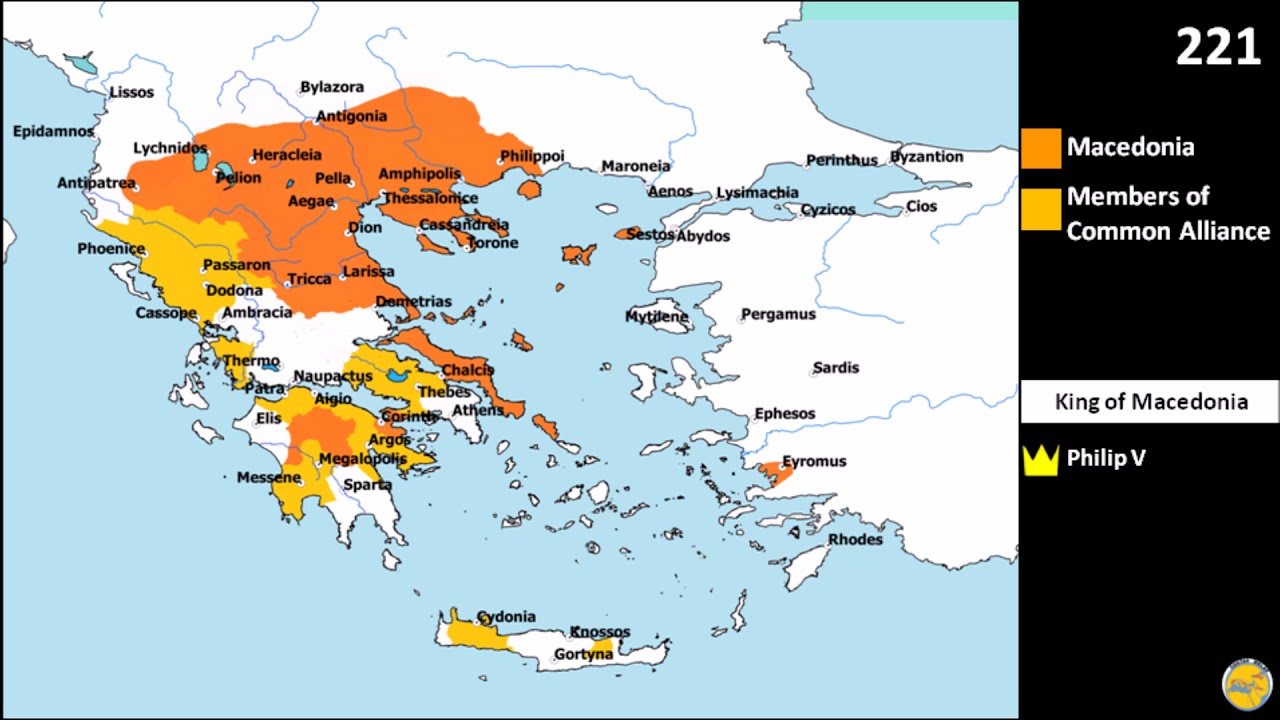
Babylon is said to be represented by the lion and Persia by the bear. Greece/Macedonia is said to be the leopard and its four wings and heads were to represent Alexander The Great's four generals, except he actually had five (Antigonus, Cassander, Lysimachus, Ptolemy, Seleucus) that fought over his kingdom, and only three of generals created dynasties.

Cassander died without an heir. Lysimachus was killed by Seleucus. Antigonus was limited to ruling Macedonia, Greece and its islands, before he died. Ptolemy ruled Egypt, Seleucus ruled Syria, with both of these dynasties, at different times, having rule over Judea.

    Antigonus' Kingdom   

Ptolemy's Kingdom


As is evident the Ptolemic and Seleucid dynasties were greater than the Antigonid dynasty of the three kingdoms after carving up the Macedonian expansion of Alexander the Great.

The fourth beast is not the Roman Empire resurrected but the cojoining of what is represented by the other three beasts which were prophesied to remain until the time of the end. Babylon, Persia, Macedonia have ceased to exist, so they could not possibly be represented by the three beasts.

The Four Beasts


The Six Kingdoms

The accuracy of Daniel’s prophecy is such that skeptics cannot believe the writer did not name Antiochus IV Epiphanies. For they believe this was clearly written after the fact. 

However, what these skeptics do not realize, this prophecy also points to the four empires that are to follow the Greek Empire,, which follows the Persian/Median Empire, and identifies what can be expected at the end of the age that we are living in now. This is because the Bible often has more than one application. After all, the written word of God is very much a historical record, as well as a being a prophetic message with a devotional application.

The Islamic Caliphate is something that is overlooked. Yet this is something that is growing around the world. Not so much through making converts, although this happens, usually by force, but more by breeding. Muslim women often have around 8-10 children. Europeans and those in wealthier countries have an average of 1 child. Even if an insignificant number have 4-5 children, the number of women who are remaining childless are becoming more significant in number.


What may not seem so evident in the above map of the globe is the extent Muslims are penetrating the countries where the coloring is fawn. Islamic penetration will be much greater given another 20-30 years and the numbers of Muslims in these countries that will have natural citizenry will see these colored green in the above schemata.  At current birth rates, Muslims should quadruple in number by 2050. This is, of course, if the world system survives that long.

With what is happening in Palestine, Lebanon and Syria, Zionist occupation of what is deemed Greater Israel, from the brook of Egypt to the river Euphrates, could well bring matters to a sudden end, quicker than we think.

The Six Kingdoms


To access the video, you may need to click start button at each of the 3 stages. 
Too fast, playback speed can be adjusted using the * icon or simply stop the page, before moving on.
If you want more, get in touch with the author.
or you can purchase Jacob's Trouble